







Tag Archive | "interview"

The Successful Match: How to Succeed in your Residency Interview


By Samir P. Desai, M.D., and Rajani Katta, M.D.
Authors of The Successful Match: 200 Rules to Succeed in the Residency Match and
250 Biggest Mistakes 3rd Year Medical Students Make And How To Avoid Them

For most residency applicants, the arrival of November marks the beginning of the interview season. This often brings back memories of the medical school admission interview, with the ubiquitous “Why do you want to be a doctor?” question.

Four years later, you find yourself in a similar situation – this time, hoping to land a position in the specialty and residency program of your choice. “Why do you want to be a doctor?” is now replaced with “Why do you want to go into [this specialty]?” and “Why are you interested in our residency program?” While the questions will differ to some extent, you may be experiencing the same gamut of emotions – uncertainty, nervousness, and perhaps even fear.

Read the full story

Posted in Interview Secrets, MedicalComments (2)

A Doctor in the House


By Elizabeth Losada, MD
SDN Staff Writer

“Is there a doctor in the house?” is a Hollywood cliche.  But when it comes to the houses of the United States Congress, the answer is always “Yes.”  Physicians have served in every Congress from the first in 1789 through the current 111th Congress.(1)

Currently, there are 16 physicians who serve as members of Congress (1), 14 in the House of Representatives and two in the Senate (2). With health care reform a pressing issue currently facing the United States, several additional physicians are seeking election to Congress this year in races across the country (3).

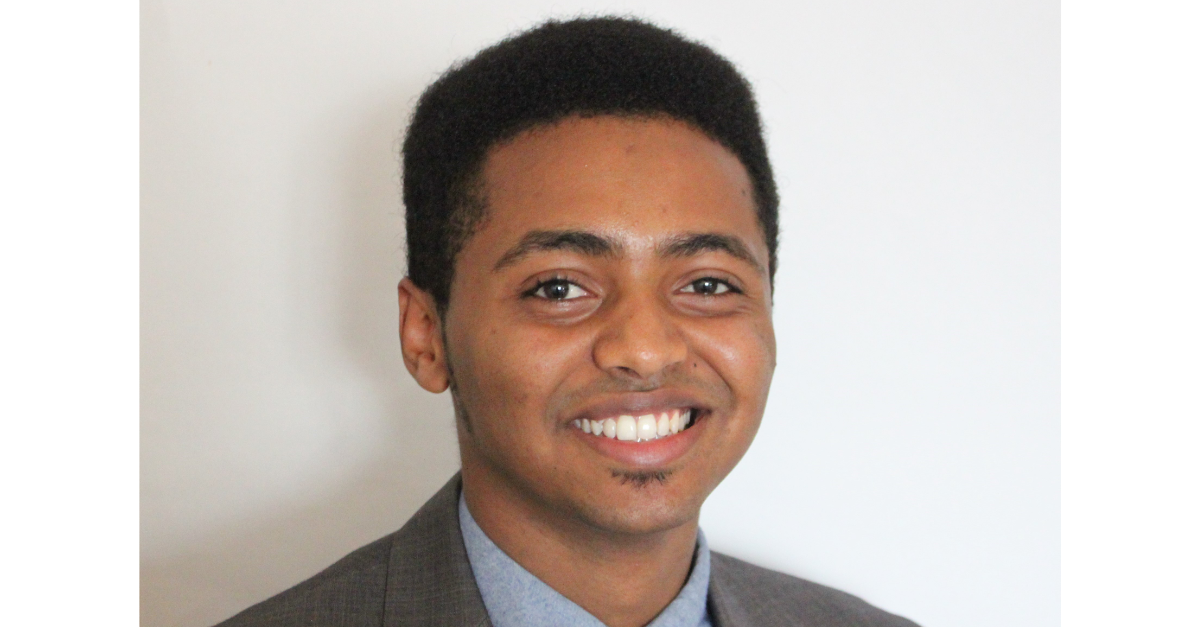
Dr. Ami Bera

Dr. Ami Bera

The Student Doctor Network recently spoke with physician candidate Ami Bera about what health care professionals bring as candidates, and what life is like on the campaign trail for a physician.

Read the full story

Posted in Health Care Policy, MedicalComments (1)

Evidence-Based Medicine: Is American medical care based on science or politics?


A_Berg3313_Med

Dr. Al Berg

by William Burnett

Alfred O. Berg, MD, MPH, is a professor at the Department of Family Medicine at the University of Washington in Seattle.  He is board certified in Family Medicine and General Preventive Medicine and Public Health.

Dr. Berg’s research has focused on clinical epidemiology in primary care settings.  He has served as chairman of the United States Preventive Services Task Force, co-chair of the otitis media panel convened by the Agency for Health Care Policy and Research, chair of the CDC STD Treatment Guidelines panel, member of the AMA/CDC panel producing Guidelines for Adolescent Preventive Services, member of the Institute of Medicine’s Immunization Safety Review Committee, and chair of the Institute of Medicine’s Committee on the Treatment of Post-traumatic Stress Disorder.

He currently chairs the CDC’s panel on Evaluation of Genomic Applications in Practice and Prevention.

He recently spoke with the Student Doctor Network about evidence-based medicine and health care reform. Read the full story

Posted in Health Care Policy, Medical, Physician ProfilesComments (11)

Opportunities in the Indian Health Service


by William H. Burnett

IMG_8048

Charles Q. North, MD, MS

Students may not be aware of the variety of opportunities available within the Indian Health Service (IHS).

To learn more about IHS and the volunteer, scholarship, and employment opportunities available, the Student Doctor Network recently spoke with Dr. Charles North, retired Chief Medical Clinical Officer for Indian Health Services.

Charles North attended medical school at the University of Pittsburgh and completed his residency at the University of Minnesota.  Currently, he serves as Professor of Family and Community Medicine at the University of New Mexico School of Medicine.

Would you explain what the Indian Health Service is?

Gladly. The Indian Health Service (www.ihs.gov) is an agency within the United States Department of Health and Human Services (HHS). Since IHS is designated as an agency or “Operating Division” within HHS, it is a parallel organization to the Centers for Disease Control (CDC), the National Institutes of Health (NIH), the Food and Drug Administration (FDA) and several others. Read the full story

Posted in Medical, Physician ProfilesComments (3)

How Decision Science Can Make You Floss


by Laura Turner
SDN Staff Writer

Dr. Talya Miron-Shatz

Dr. Talya Miron-Shatz

Talya Miron-Shatz, PhD, is a decision scientist, studying the way people interpret medical information. She teaches consumer behavior at Wharton and is a keen public speaker, advocating the importance of understanding the psychological aspects of medical decision making.

She recently sat down to speak with SDN about how consumers and health care providers make medical decisions.

What is decision science, and how does it apply to health care decisions that consumers make?

Imagine you are designing a sticker promoting flossing. Should you say, “Flossing helps you prevent gum disease,” or should you emphasize the loss of protection that results from neglecting to floss? It turns out that people are more motivated to act when something they have is about to be taken away from them. So, when you’re in the bathroom at night, being aware of the potential risks to your gums might prompt you to dedicate a few extra minutes to the fine art of flossing. This, in a nutshell, is what decision science is about.

Read the full story

Posted in Dental, Medical, Pharmacy, Psychologist Profiles, PsychologyComments (9)

White Coat or White Glove: Concierge Medicine 101


By Laura Turner
SDN Staff Writer

“Boutique” or “retainer” medical practices have been steadily growing since 2005.  In this practice model, patients pay an annual retainer fee outside of insurance to gain greater access to their physician. (1)

While it is growing in popularity, some physicians, ethicists, and policy makers are concerned about the trend. (2)

“Concierge care…is like a new country club for the rich,” Representative Pete Stark, Democrat of California, said at an economic committee hearing to Congress in April 2004. “The wealthy will pay for exclusive access to quality care, and everyone else will continue to have inferior access to primary care physicians, specialists, and basic medical advice.” (3)

Proponents of concierge medicine, on the other hand, say that it enables doctors to provide the best possible care and remain in a clinical setting.  Dr. Bernard Kaminetsky, an internal medicine physician in Florida, told the New York Times he would be working for a pharmaceutical company if he hadn’t been able to move to a concierge model.  “I’m really helping a lot of people.  I feel good about what I do,” he stated. (2)

Read the full story

Posted in MedicalComments (38)

The Successful Match: Interview with Dr. Marianne Green


By Samir P. Desai, M.D., and Rajani Katta, M.D.
Authors of The Successful Match: 200 Rules to Succeed in the Residency Match and
250 Biggest Mistakes 3rd Year Medical Students Make And How To Avoid Them

A key component of the successful match is a full understanding of the residency selection process, and the factors that influence it. Program directors are key decision-makers in this process, and their insights and experience are invaluable. In future columns of The Successful Match, we will present conversations with program directors and other key decision-makers across the different specialties.

We would like to preface these upcoming columns by highlighting the results of an important study done by Dr. Marianne Green. Dr. Green is the Associate Dean for Medical Education at the Northwestern University Feinberg School of Medicine. She is the former associate program director of the internal medicine residency program at Northwestern. Dr. Green is the recipient of multiple teaching awards, and her peers have recognized her as one of the “Best Doctors in America.”

Read the full story

Posted in MedicalComments (8)

Medical School Admissions: Lessons Learned


jessica-freedman-mdBy Jessica Freedman, MD
President of MedEdits: Medical Admissions

AMCAS 2010 opens in early May and the next wave of applicants is preparing to submit applications, so it seems apropos to summarize some key observations I have made while privately advising medical school applicants. Here is my list of some essentials for medical school applicants to improve their chances of acceptance.

  1. Submit an early application
    Everything you read tells you that the #1 rule of medical school admissions is to apply early. But, I find that many applicants still ignore this advice. You should not only submit your application as early as possible but also make sure that your transcripts and letters of reference are sent in promptly.
  2. Take your MCAT exam early
    Again, the key word here is “early.” Your application will not be reviewed until your pending MCAT scores are in so, if you have worked hard to submit your AMCAS application in June, don’t negate this effort by taking an August MCAT.
    Read the full story

Posted in MedicalComments (36)

NOVA’s Doctors’ Diaries


by Laura Turner
SDN Staff Writer

In 1987, NOVA’s cameras began rolling to chronicle the lives of seven medical students embarking on their years-long journey to become doctors. From their first days at Harvard Medical School to the present day, none of them could have predicted what it would take, personally and professionally, to become a member of the medical community.

The final installment of NOVA’s Doctors’ Diaries is a two-part special premiering Tuesday, April 7 and 14 at 8pm ET/PT on PBS (check local listings).  The longest-running U.S. documentary of its kind, Doctors’ Diaries begins by reuniting the physicians on the steps of Harvard Medical School 17 years after graduation.

The seven physicians profiled in NOVA's "Doctors' Diaries" (photo credit: NOVA - Betsey Cullen)

The seven physicians profiled in NOVA's "Doctors' Diaries" (photo credit: NOVA - Betsey Cullen)

Footage from the previous four installments in the series offers a rare and candid look at the rewards and personal sacrifices each has made over the last two decades – from the stress of medical school exams, to the first cut into a cadaver, through first wedding ceremonies (and sometimes second or third), internship, residency, and life as a certified M.D.

The seven physicians featured in Doctors’ Diaries have taken divergent paths:

  • Tom Tarter, Bloomington, IN – The Bronx-born, long-haired, tattooed ER doctor has constantly grappled with how he is perceived as a physician. After his contract was terminated at the local hospital he became an itinerant M.D., forcing him to look for work in distant locations. Once a bouncer, an Olympic-hopeful weight lifter, and a mechanic, Tom is now on his fourth marriage and struggles to make ends meet.
  • Jane Liebschutz, Boston, MA – Currently an internist specializing in underserved populations, domestic violence, and addictions. NOVA was there for the gut-wrenching moment when Jane experiences a patient dying in the operating room for the first time.
  • Jay Bonnar, Belmont, MA – This private practice psychiatrist is also involved in outpatient group therapy and teaches at the hospital.
  • Elliott Bennett-Guerrero, Durham, NC – A successful anesthesiologist who picked his specialty partly based on the less demanding hours-this now affords him more time to be at home with his second wife and two young sons and pursue his new passion: golf.
  • Luanda Grazette, Thousand Oaks, CA – Originally trained as a clinical cardiologist, Luanda now works for a pharmaceutical company to develop drugs that will help heart patients.
  • David Friedman, Baltimore, MD – As an ophthalmologist and professor at Johns Hopkins University, David aims to one day establish a hospital to provide eye care to the millions of people worldwide who currently have no way to improve their poor vision.
  • Cheryl Dorsey, New York, NY – Although she eventually completed her pediatrics training, she never practiced. Cheryl put her residency on hold to found a program that provides free curbside health services for minority communities; today she is the president of the same nonprofit that funded her Family Van mobile clinic.

Producer and director Michael Barnes recently spoke with The Student Doctor Network about Doctors’ Diaries. Read the full story

Posted in Medical, Physician ProfilesComments (16)

Getting Into Residency: Part 2


by Jessica Freedman, MD
President of MedEdits: Medical Admissions

As the current residency application cycle is winding down, the next wave of applicants is getting ready to apply for the 2009/2010 season.  As you begin thinking about your residency application, you should consider who will be writing your letters of recommendation (LORs), how you will talk about your path to residency at your interview, and how you should contact programs and follow up with them (and if this really makes a difference in outcome).

This article serves as a follow-up to the article, “Getting Into Residency: Part 1,” which was published on the Student Doctor Network in October 2008. Read the full story

Posted in Dental, MedicalComments (7)

Current SDN Poll

Are you interested in running for elected office?


View Results

Loading ... Loading ...

SDN Twitter Updates

Creative Commons License   We subscribe to the HONcode principles of the HON Foundation.  Click to verify.   HACKER SAFE certified sites prevent over 99.9% of hacker crime.   TRUSTe Trust Mark  

PHVsPjwvdWw+