

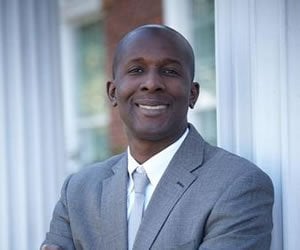
Dr. Damon Tweedy is an assistant professor of psychiatry at Duke University Medical Center and a staff physician at the Durham Veteran Affairs Medical Center in North Carolina. He graduated from Duke University School of Medicine and completed both his internal medicine and psychiatry residencies at Duke Hospital. He has published articles about race and medicine in a variety of publications, including the New York Times, Washington Post, Raleigh News & Observer, JAMA, and Annals of Internal Medicine. His memoir, Black Man in a White Coat: A Doctor’s Reflections on Race and Medicine, was published in 2015 and lauded as a New York Times Bestseller and one of TIME magazine’s top ten non-fiction books of the year. In his book, Dr. Tweedy examines his early life in a segregated, working-class background and the complex interplay between race and medicine. I asked Dr. Tweedy to share his thoughts on his path as a physician-writer, and he kindly responded via e-mail:
Please tell us about your background, and what you’re doing now.
How did you become interested in writing?
When and how did you decide to make writing a part of your career?
I’ve been writing off/on for several years, but never really thought of it as being part of my career until I officially got a book contract to write Black Man in a White Coat in 2013. Now, it has certainly become part of my overall career in terms of how I spend my time and plan for the future.
Has writing changed how your practice medicine? If so, how?
That’s a great question. Honestly, I can’t say that it has, but maybe I need more time to reflect upon that.
What were the greatest challenges of merging writing with your career as a psychiatrist?
Really it’s just finding the time to write. During the process of writing the book, it was very haphazard – sometimes I’d write late at night for a stretch, then switch to early mornings, then some weekends. It certainly is a challenge to balance especially with work and family.
What was most helpful in building your career as a physician-writer?
Starting small and reaching out to local writers. I found that one small piece of writing led to a bigger opportunity, and then an even bigger one. It sort of had the feeling of putting together a large jigsaw puzzle.
Tell us about your first big break.
When I first had the idea of writing a book around 2011 or 2012, a local author put me in touch with an out-of-state freelance editor who had helped him write a book and she was wonderful. Working with her allowed me to grow as a writer and got my writing to the level where a literary agent and publisher would take interest. About six months before the book was set to be published last year, it got selected as what is called a “buzz book” for an annual book expo in NYC, which was really what kick-started the level of media attention that the book has received.
How do you select topics for your writing and handle ethical issues?
Another great question. I typically haven’t planned in advance what I would write about. Rather I was writing about experiences that I had from the perspective of an African-American physician and that led to what became my book. However, moving forward, I’ll probably be a bit more deliberate about what I choose to write about. As for the patient privacy side of the question, there were many situations in medical school and residency that, while sensational, I did not write about because there was simply no way to protect the privacy of those involved. For those patients that I have written about, I followed the standard convention you find in virtually all medical narratives to change names and other identifying characteristics.
As a psychiatrist, maintaining boundaries is a very important part of your work. But as a memoirist, revelation is crucial. In Black Man in a White Coat, you reveal a lot about yourself — from how a lack of sexual experience influenced your obstetrics and gynecology rotation to moments of transference-countertransference with your patients. How did you decide what to disclose about yourself?
I’m not sure how well I thought that through. Much of my writing came from an emotional place – much different in many respects from my work as a psychiatrist.
What piece of indispensable advice would you give to physician trainees (students, residents, fellows) interested in writing?
I would say first, regardless of what type of writing you want to do (book-length, article-length, etc.), it is important to be an avid reader of that form of writing. Not only can you learn from many good writers, but you can also see what is out there and where you might be able to find your niche. For memoir, I would suggest that you take notes/keep a short diary as you go through the training process. It’s very helpful when going back and writing about the past.
Updated August 28, 2021. The article was updated to correct minor grammatical errors and to update technical details.
Need expert support?
Get confidential guidance at any stage of your career, or work with a pre-health coach to build a stronger application plan.
Ask an Advisor
Ask a quick confidential question in an anonymous setting and hear from SDN verified expert advisors. Always human, always free.
Acceptance StrategyWork with a Pre-Health Coach
Work longitudinally with SDN's pre-health coach on application strategy, planning, and decisions that can strengthen your application.
Nonprofit SupportSupport Free Advising
Support SDN's nonprofit service and keep free advising available to every student who needs trusted guidance.

