


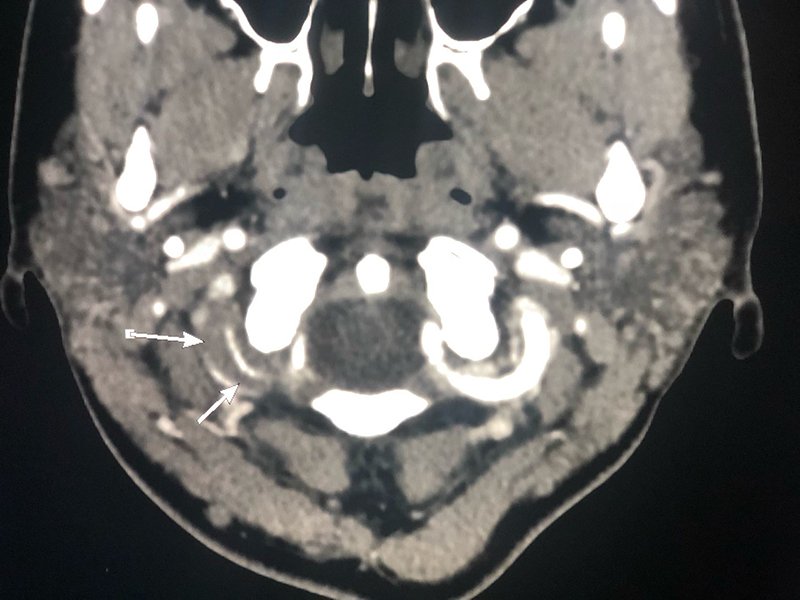
A 28-year-old female presents to the emergency department with an occipital headache and neck pain. She mentions her symptoms appeared after hyperextending her neck while playing tennis the day before. Examination reveals dysdiadochokinesia and decreased lateral vision. A contrast head and neck CT demonstrate the findings seen here. Based on this patient’s probable diagnosis, which of the following treatments is most appropriate?
A. Surgical consultation
B. COX-2 inhibitor
C. Observation
D. Antithrombotic therapy
Find the answer, discuss this case, and more on Figure 1.
Explore cases, quiz yourself, and solve medical mysteries along with thousands of other medical professionals around the world on Figure 1, the free app where doctors expand their clinical knowledge.
Continue Your Research
Next Step for Applicants
Use this article as a handoff into structured school research, forum insight, and the next stage-specific resource.
Research Schools
Move from broad interest to structured program research for Medicine.
ValidateExplore the SDN Forums
Learn from premeds, medical students, and physicians sharing real experience in the SDN Forums.
AdvanceApplication Guide
Stay on track with SDN guidance for deadlines, secondaries, interviews, and decisions.
Need advice?
Use SDN expert support when you want confidential answers now or more longitudinal pre-health advising focused on acceptance.
Ask an Advisor
Ask a quick confidential question in an anonymous setting and hear from SDN verified expert advisors. Always human, always free.
Acceptance StrategyWork with a Pre-Health Coach
Work longitudinally with SDN's pre-health coach on application strategy, planning, and decisions that can strengthen your application.


Surgical Consultation. Possible fracture of the cervical bone resulting in occlusion of one of the arteries (vertebral?), hence requiring surgical replacement of the bone. Lack of blood flow to cerebellum and occipital lobe could possible explain the loss in vision and dysdiadokinesia.